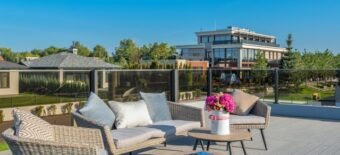


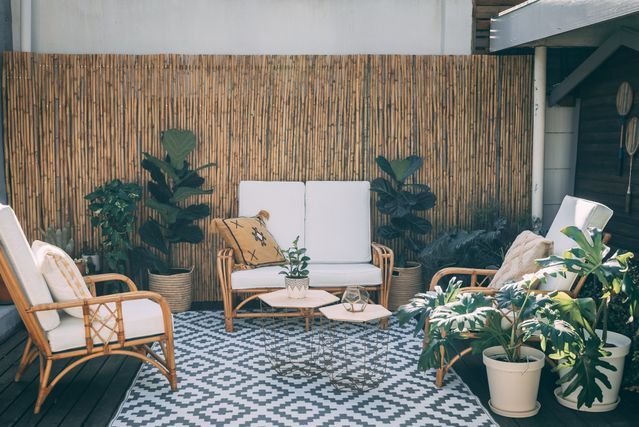

Something pretty predictable happens to outdoor furniture in Australia. It looks perfect in the showrooms, great on the deck for the first few months and then by the time the second summer rolls around it starts to fall apart, bleached, warped, or developing rust along the seams. The cushions develop a faint mould smell. The wicker starts to fall apart. It’s not because the product has been mistreated; it’s just that it wasn’t designed for the Australian environment.
Australia’s outdoor conditions are more than just a minor consideration when it comes to furniture choice, and outdoor furniture Australia buyers need to keep this in mind from the start.
What the Australian Outdoor Conditions Really Do to Furniture?
The Bureau of Meteorology grades the UV Index on a scale from 1 (low) through to 11 plus (extreme). Sydney’s summer UV peaks hit 11 or 12, Brisbane and Perth regularly hit 11 to 13, and Darwin and Cairns can reach 13 to 14. For comparison, London peaks at around 7 to 8 in its best summer weeks.
A piece of outdoor furniture that’s been built to European standards is designed to handle UV of around 7 or 8; that’s put into a Sydney backyard, where the UV peaks at 11 or 12 all the way from September to April, it’s a recipe for disaster. Fabrics get bleached, plastics get brittle, untreated timber cracks and synthetic wicker just falls apart as the UV breaks down the polymer that holds it together. None of this is a manufacturing fault in the classical sense anyway; the product is doing exactly as it’s supposed to, it’s just that its design wasn’t built for here.
And then there’s the coastal salt air that adds to the UV and makes corrosion across metal parts accelerate.
Material Guide: What Stands Up and What Doesn’t
Powder-coated aluminium is without a doubt the best material to use in Australian outdoor conditions. It’s more or less impossible to rust, it’s resistant to salt air, stays looking good for years and only needs the occasional clean to keep it looking its best. The weight also makes it less prone to being blown around on exposed decks and balconies.
Resin wicker made from UV-stabilised polymer does pretty well outside in Australia. Natural rattan is a different story altogether though. It’s a material that’s really only suited to indoor use in this climate; it absorbs moisture, degrades really quickly in UV and can’t handle being outside in the open without some sort of protection in a mild southern city.
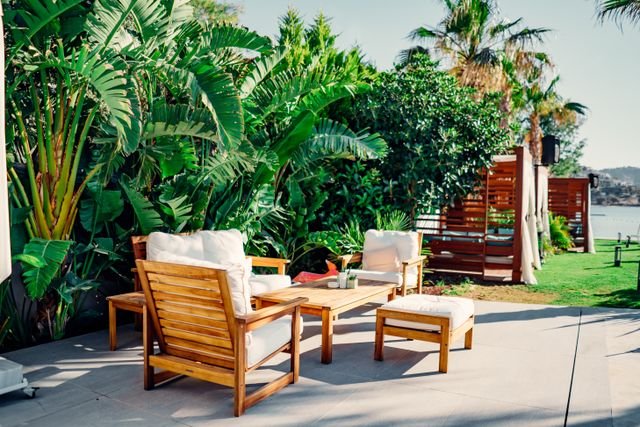
Acacia and teak timber both do pretty well outdoors with the correct maintenance routine; however, they do need to be oiled from time to time, otherwise they go grey and develop surface checking within a single season. You’d be surprised how quickly the untreated plantation timber sold without any UV seal can deteriorate.
The Cushion Problem Nobody Mentions at the Point of Sale
It’s pretty clear that indoor foam installed in outdoor-labelled furniture is the single biggest point of failure when it comes to using furniture outdoors in Australia. It’s a bit too much to expect people to remember, but indoor foam holds water, starts to smell of mildew when the humidity gets too high and usually collapses within a single or two wet seasons. Outdoor-grade cushions on the other hand use special foam that drains water away, have UV-stable fabric and covers that actively stop mildew rather than just trying to repel water.
Measuring Before Purchasing
The biggest mistake made is measuring for size by eye and not with actual measurements of the area. The outdoor dining table needs a minimum of 90 centimetres of clearance on all sides once the chairs are put down. For L-shaped and modular furniture, corner measurements have to take into consideration the steps, garden walls and structural supports. Overhead clearance has to be taken care of in case there are umbrella poles near the eaves. Decking load capacity needs to be taken into consideration with regard to large stone top tables which are quite heavy.
What the Warranty Doesn’t Tell You?
Guarantees under the Australian Consumer Laws apply no matter what the stated warranty period is. In the case of outdoor furniture, a reasonable standard of quality would mean that the item must be able to withstand the normal wear and tear of an outdoor environment in Australia. Many warranties specifically do not cover fading and UV damage, which is basically the mode of failure in Australian conditions. A comparison between the two makes one aware of the actual protection that the warranty affords.
Outdoor furniture that lasts through two summers, and then three and five, is not luxury but just what outdoor furniture is supposed to do.