


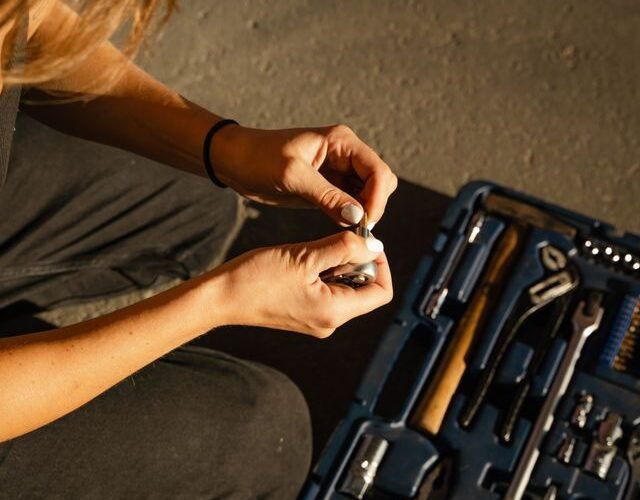

Leaking from the refrigerant line or fitting usually stems from the same origin: flared connections that look good at installation but have never been properly flared in the first place. The flare is hidden inside when the nut is fastened, and the fact that it is hidden is the reason why the quality of the flare tools used in creating the connection is so important before the connection is ever tested for integrity.
What Pipe Flaring Actually Achieves?
Pipe flaring creates an enlarged cone-shaped end on the pipe that can sit against a similarly shaped seat on a flare fitting. Choosing the right flaring tool for the job is essential before you even start, because the geometry of the flare is set entirely by the tool. Fastening the flare nut will press the flared end of the pipe against the fitting and create a seal due to the metal compression. There is no glue, no gaskets, no lubricant required, just the precise match between the two geometries of flaring and fitting.
Single Flare vs. Double Flare: Understanding the Choice
A single flare produces just one cone going out from the tube end. But a double flare folds that cone back in on itself, resulting in a thicker, more reinforced seat; this is especially good for withstanding repeated stress under variable loads.
In low pressure jobs, single flares are just fine and are often used in water pipes in domestic dwellings and in some of the connections in refrigeration, mainly because the materials involved like copper are quite easy to work with. Double flares are however a must in brake lines, where the very clear safety standards demand the extra strength the doubled-up flare gives. To cut a long story short, hydraulic systems are a bit more complicated and here the right kind of flare to use actually depends on the exact fitting standard and system you’re working with; the Americans, for example, have a set of rules and regulations covering single and double flare configurations which must be followed.
Aussie construction and trades have a massive workforce; over 1.3 million people were employed and generated almost $570 billion of industry income back in the 2022-23 year. That just goes to show how many people depend on getting the plumbing, refrigeration, HVAC and hydraulic connections right so they work and that means you need to get the right flares right.
Manual vs. Hydraulic: What Drives the Choice?
Manual flaring is where you’ve got a handle to turn and a cone to push into the end of the tube, which is then deformed into the flare shape. All a bit old-fashioned, the manual tools are good for low-volume work because they are pretty compact and portable. They work just fine, too, as long as you know what you are doing.
On the other hand, hydraulic flaring uses a bit of force from a hydraulic system instead, which means no more messing about with human power trying to make the same old connection time and time again. You get the same result, every time, which is exactly what you want when you’re in a workshop churning out lots of assemblies. And that is why people in the trade tend to go for hydraulic tools in those situations.
Material Compatibility: Not All Tubes Flare the Same Way
The usual stuff that gets flared in Australian plumbing and refrigeration work is copper; soft enough to work with without putting too much pressure on it. The problem you get is work hardening; if the copper has been bent a lot then when you try to flare it the material gets all stiff and may crack when you’re trying to form it.

The Mistakes That Produce Bad Flares
Four main things go wrong most often, it seems, and that is where most flare failures come from:
- Not having enough of the tube sticking out the back of the yoke when you try to flare it simply means it ends up being a shallow flare that doesn’t sit properly on the fitting face.
- If you’ve got too much tube hanging out past the yoke, it just ends up getting deformed or cracked when you’re trying to flare it.
- If the tube is clamped at an angle, rather than straight on, it all gets a bit crooked and the flare doesn’t sit properly on the fitting seat.
- If you forget to deburr the cut end before you flare it then you end up with a sharp edge which will score the forming cone when it goes in; that can then create a crack in the base of the flare when it becomes a part of the assembly.
None of these is usually spotted until you pressurise the assembly and, by that time, it is too late; which is why catching them before then is so important.
According to the Australian Bureau of Statistics, the construction and trades sector employed over 1.3 million Australians in 2022-23, underlining just how widely correct trade practices matter across the industry.