


Most artificial turf installations that fail within the first 12 months have one glaring thing in common: the problems usually start way before the turf has even been put down. As far as artificial turf goes, Perth’s got its own unique set of challenges thanks to the ground conditions, water restrictions and extreme temperature swings. You’d almost think this was a straightforward process, except when you take all those variables into consideration before work even starts, that’s the difference between a lawn that’ll last for 10 years and one that’s looking all wonky and stinky after just one summer.
Why Perth’s Ground Conditions Can Make or Break Your New Lawn?
Now you might think sandy coastal soils that drain super fast would be a good thing, but it’s also super loose and prone to shifting, which means if the substrate isn’t properly prepared and compacted, the edging of the turf is going to start coming up. And then there’s the water restrictions in Western Australia; once you’ve taken out the real grass, it’s pretty much a done deal you can’t just go back to a natural lawn without jumping through hoops of exemption applications. Which makes that artificial turf a permanent decision for most Perth households, no trial run. And let’s not forget the crazy temperature swings in Perth from freezing cold winter mornings to scorching summer days that push past 40 degrees; all that movement in the turf and its backing starts to show some serious wear and tear, especially if the turf installation Perth hasn’t been set up to handle it.
Base Preparation: The Real Key to Your Turf’s Longevity
Removing the existing lawn to a depth that lets you get to the base layer is the very first and most crucial step you need to take when putting in artificial turf in Perth. If you don’t take it all the way to the right depth, you’ll leave all the organic matter behind and what happens is that stuff starts breaking down over time and causes uneven settlement and no matter how much surface brushing you throw at it, you ain’t gonna fix it later. What you need is a compacted base of cracker dust or limestone that’s been laid down consistently and graded spot on, so you get a stable, free-flowing foundation for the turf to work properly on. And don’t even get me started on grading that base so water flows away from the property foundation and towards the drainage points; water that collects beneath the turf is just a recipe for stink and for wearing out the backing a lot faster than any surface wear. And for putting greens, the base needs to be deeper and graded to a precision that makes the green actually work properly.
Edging: The Detail That Separates Professional Work from DIY
The aluminium edging forms a neat, termite-proof border which retains its form throughout the years in the shifting sands of Perth, rather than the seasons. While timber edging may appear attractive on the surface, it is susceptible to rotting if exposed to dampness, and termite destruction in Western Australia, hence forming a shorter-term investment than what most homeowners usually anticipate. Plastic edging is not immune to the harshness of the UV rays which affect it within a couple of Perth summers; thus causing it to deteriorate and separate from the turf. The L-shaped design of aluminium edging makes it easy to tuck the turf edge and give a neat, barely noticeable border. Spike placements also need consideration in the sandy soil since there should be three to four spikes every 3000mm to prevent edge-lift.
Adhesive and Seam Work: Where DIY Installations Most Commonly Fail
Polyurethane adhesive is considered the professional option in Australia for joining seams due to its continued flexibility after curing that caters for the expansion brought about by temperature changes throughout the year in Perth. The household glue and contact cement used during DIY installation are not flexible and thus brittle in high temperatures; leading to seam failure in a matter of one summer.
Infill, Pet Care and Long-Term Maintenance
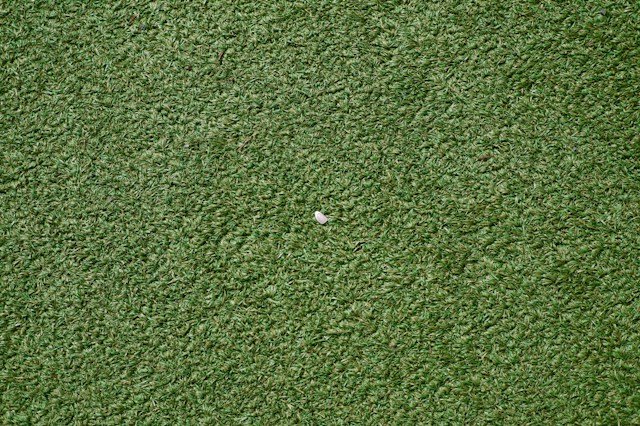
The silica sand infill helps in anchoring the turf; assisting piles to stand erect and, in the case of putting greens, allows one to control the surface speed through variation of the infill. Zeolite infill is recommended for homes with pets due to its capacity to absorb ammonia and reduce odour between cleanings. The bio-enzymatic cleaners help in breaking down the compounds in the pet urine at the molecular level, and the neutral pH is safe for the synthetic fibres after the treated areas dry. Brushing the synthetic turf against its grain keeps the pile standing and prevents matting of the pile in high-traffic areas, while the leaf blower helps to remove leaves from neighbouring trees much better than a rake since it does not interfere with the infill of the surface.