


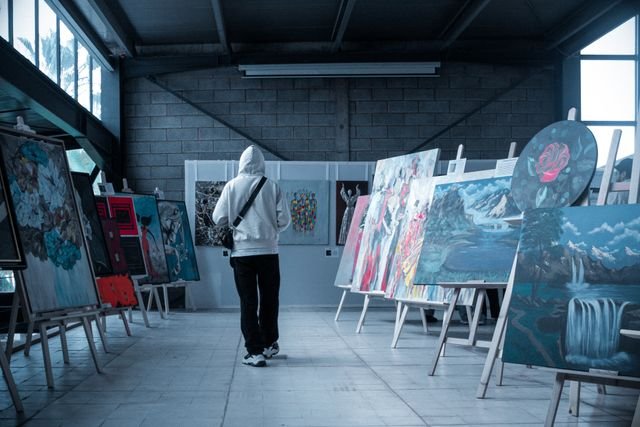

Art has a funny way of becoming more interesting when it leaves the places you expect to find it. A painting in a major museum can feel important before you’ve even looked at it. Put something equally striking in a small independent gallery, warehouse or converted shopfront, and the experience is different. You’re often closer to the artist, closer to the ideas and closer to the sense that something is happening right now rather than being preserved behind glass.
Spaces like SoHigh Gallery are part of a broader independent arts ecosystem that gives emerging artists, experimental work and local creative communities somewhere to exist outside the structures of major institutions. That role is easy to underestimate, especially in cities where rising rents and commercial pressure make it harder for small cultural venues to survive.
Independent Spaces Can Take More Risks
Large institutions have enormous strengths. They have collections, conservation resources, specialist staff and the ability to stage exhibitions at a scale smaller venues simply can’t match. But size also brings structure, planning cycles and practical limitations. Independent galleries can often move differently, exhibiting artists who aren’t yet widely known, responding quickly to local conversations or presenting ideas that would be considered too niche for a larger venue.
That freedom can make independent spaces feel unpredictable in the best possible way. You might walk in expecting a conventional exhibition and encounter projection, sculpture, performance, sound or work that doesn’t fit neatly into any category at all. Not everything will appeal to everyone, but that’s partly the point.
They Give Emerging Artists Somewhere to Start
Every established artist was once unknown. Before museum retrospectives, major commissions and auction records, there are usually smaller exhibitions, shared studios, artist-run projects and galleries willing to put new work in front of an audience. Independent spaces often provide that first serious opportunity.
For an emerging artist, having work shown publicly is about more than simply hanging something on a wall. It creates a chance to see how people respond, meet other artists, develop professional experience and start building a record of exhibitions. Those early opportunities can be difficult to find if the cultural landscape consists only of major galleries and commercial spaces focused on established names.
A healthy art scene needs different levels. Without places for artists to experiment and develop, the pipeline eventually becomes much narrower.
Galleries Are Social Spaces Too
People sometimes talk about galleries as though they’re simply rooms containing objects, but a good independent gallery is often just as much about the people who pass through it. Openings bring together artists, designers, musicians, photographers, students, collectors and people who may have wandered in out of curiosity. Conversations start because there’s something specific in the room to react to.
That creates a different kind of social environment from a bar, restaurant or networking event. Nobody has to manufacture a reason to talk because the exhibition provides one. For creative communities in particular, these informal connections can lead to collaborations, shared projects and friendships that wouldn’t necessarily have happened otherwise. The value of a small gallery can therefore extend well beyond whatever happens to be hanging on the walls that month.
They Make Art Feel Less Intimidating
Traditional cultural institutions can feel imposing if you haven’t spent much time in them. There’s often an unspoken anxiety around contemporary art in particular: am I supposed to understand this? Is there a correct interpretation? Do I need to know who the artist is before I’m allowed to have an opinion?
Smaller independent spaces can help break down some of that distance. You may be able to speak directly with the artist or curator, exhibition openings can be informal, and the person standing beside you might know nothing more about the work than you do. That makes it easier to approach art with curiosity rather than worrying about whether you’re interpreting it properly.
You’re allowed to like something without being able to explain why, and you’re also allowed to dislike it. In fact, some of the most memorable exhibitions are the ones that provoke strong disagreement rather than polite approval.
A City Needs Places That Aren’t Entirely Commercial
Urban life becomes dull very quickly when every available space is expected to maximise revenue per square metre. Cafés, retail stores and restaurants are important parts of a city, but cultural spaces serve a different function. They provide somewhere for ideas, experimentation and community activity that isn’t necessarily organised around buying a product.
Independent galleries often operate in the awkward gaps of urban economics: upper floors, temporary leases, old industrial buildings and spaces that don’t fit conventional retail. That can give neighbourhoods character and create reasons for people to visit parts of a city they might otherwise ignore.
Ironically, creative venues often help make neighbourhoods more desirable, which can eventually contribute to the rising rents that force those same venues out. It’s a cycle seen in cities around the world, and one reason maintaining affordable creative space remains difficult.
Smaller Exhibitions Can Feel More Personal
There’s something enjoyable about seeing work without needing to navigate 20 rooms and a gift shop afterwards. A compact exhibition encourages you to slow down. Rather than trying to “get through” an entire museum, you might spend more time with a handful of works.
The setting can also change the relationship between artwork and viewer. In smaller rooms, installations can feel immersive and paintings can have more presence because there isn’t an enormous collection competing for attention. You might even end up seeing the same work twice during one visit and notice something completely different the second time. That intimacy is difficult to reproduce at institutional scale.
They Help Preserve Local Creative Identity
Cities increasingly share the same global brands, architecture trends and entertainment formats. Walk through enough shopping districts and it can become surprisingly difficult to tell which city you’re in. Local art pushes in the opposite direction.
Artists respond to the places they live, the people around them and the particular cultural conversations happening in their communities. Independent galleries provide somewhere for those perspectives to be visible. That doesn’t mean the work has to be explicitly “about” the city. The value lies in giving locally connected artists a platform rather than allowing cultural programming to be determined entirely by international touring exhibitions or commercially proven names.
A city’s creative identity isn’t built only by its largest institutions. It’s also shaped by dozens of smaller rooms where people are making and showing things before anybody knows whether they’ll become important.
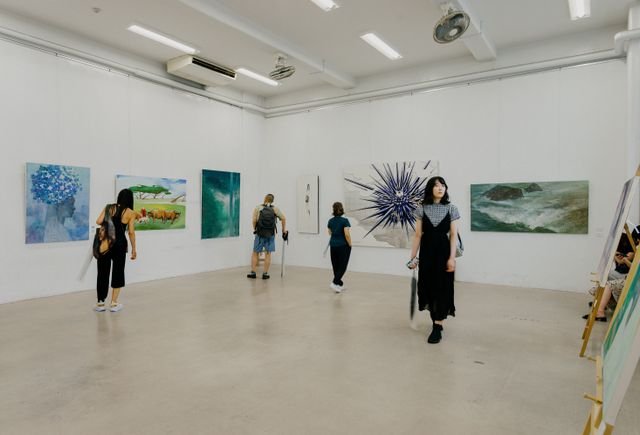
You Don’t Need to Be an Art Person
Perhaps the best way to support independent galleries is simply to visit them. You don’t need a degree in art history, you don’t need to know what you’re looking at beforehand, and you certainly don’t need to pretend to like everything you see.
Walk in, look around, read the exhibition notes if you want to and talk to someone if the opportunity arises. Leave after ten minutes or stay for an hour. Independent art spaces thrive when people treat them as part of ordinary city life rather than as destinations reserved for a small cultural elite.
And that may be their greatest contribution. They make art immediate, local and accessible. They create places where artists can test ideas, audiences can encounter something unexpected and communities can form around creativity. In a world where so much culture is experienced through a screen, there’s still something valuable about standing in a room with an artwork that exists right in front of you — especially when that room exists because a small independent space decided the work deserved to be seen.